

In every analytical laboratory, accuracy begins before the sample enters the instrument. One of the most highly searched and critical consumables in modern labs today is the syringe filter — a small device that protects instruments worth lakhs of rupees.
If you are searching for:
► Which syringe filter is best for HPLC?
► Nylon vs PTFE vs PVDF – what’s the difference?
► 0.22 µm or 0.45 µm – which pore size should I use?
► Where to buy genuine syringe filters in Delhi?
► How to prevent HPLC column blockage?
This comprehensive guide is designed specifically for Pharma QC labs, food testing labs, diagnostics centers, research institutions, hospitals, and industrial testing facilities.
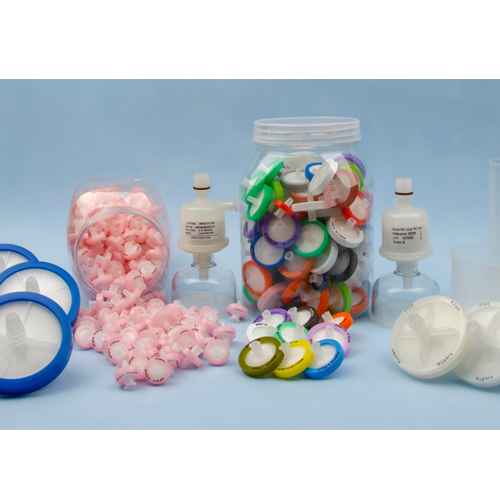
A syringe filter is a single-use membrane filtration device attached to a syringe for removing suspended particles from liquid samples before injection into instruments such as:
► HPLC
► GC
► UV-Visible Spectrophotometer
► Dissolution Testing Systems
► Particle Counters
► TOC Analyzers
Even microscopic particles can:
► Increase back pressure
► Damage chromatography columns
► Create ghost peaks
► Affect reproducibility
► Reduce pump seal life
Skipping filtration may save a few rupees today but can cost thousands in column replacement tomorrow.
View Products
View Products
Selecting the right membrane is the most important decision. The wrong membrane can lead to sample adsorption, membrane damage, or inaccurate results.
Best for: General purpose filtration
Compatible with: Aqueous and many organic solvents
► Hydrophilic membrane
► Excellent mechanical strength
► Good chemical compatibility
► Common choice for routine HPLC
Used widely in pharma QC and academic research labs.
Best for: Strong organic solvents and aggressive chemicals
► Naturally hydrophobic
► Highly chemical resistant
► Ideal for organic mobile phases
► Low extractables
PTFE is recommended when working with acetonitrile, methanol, or strong solvent systems in HPLC.
Best for: Biological and protein-sensitive samples
► Low protein binding
► High flow rate
► Broad solvent compatibility
► Excellent for biotech applications
Frequently used in diagnostics labs and pharmaceutical R&D.
Best for: General filtration and pre-filtration
► Economical option
► Good chemical resistance
► Suitable for non-critical applications
Best for: High particulate samples
► Excellent dirt-holding capacity
► Used as pre-filter
► Improves life of final membrane filter
Understanding pore size selection is essential for correct application.
► Used for sterile filtration
► Removes bacteria and microorganisms
► Required for microbiology labs
► Slightly slower flow rate
► Used for particle removal
► Ideal for routine HPLC sample prep
► Faster filtration
► Most commonly used in pharma QC
If your goal is sterile filtration → choose 0.22 µm
If your goal is HPLC sample clarity → choose 0.45 µm

View Products

View Products
► Individually packed
► Gamma sterilized
► Used in cell culture
► Required for microbiological applications
► Cost-effective
► Used in chemical analysis
► Suitable for routine chromatography
Always select based on regulatory requirement and application type.
► 13 mm – Small volume samples
► 25 mm – Standard laboratory use
► 33 mm – High volume filtration
Larger diameter means better flow rate and less pressure buildup.
Quality matters. Using poor-grade filters may cause extractables or membrane rupture.
Premium brands widely trusted in laboratories include:
► Millipore
► Sartorius
► Rankem
► Axiva
► Nupore
These brands are known for:
► Low extractables
► Batch-to-batch consistency
► Regulatory compliance
► Reliable membrane integrity
AAA Enterprises supplies filtration solutions to:
► Pharmaceutical manufacturing
► Food & Beverage industry
► Electronics sector
► Automobile testing labs
► Textile & Printing industry
► Medical device companies
► Diagnostic laboratories
► Hospitals
► Government institutions
AAA Enterprises is a new-age Lab & Process Solution Provider based in Mayur Vihar, New Delhi, India.
What sets them apart:
► Technical team to guide correct membrane selection
► Genuine branded products
► Competitive pricing & bulk offers
► Quick response to urgent requirements
► Wide product portfolio beyond syringe filters
They also supply:
► Filter membranes
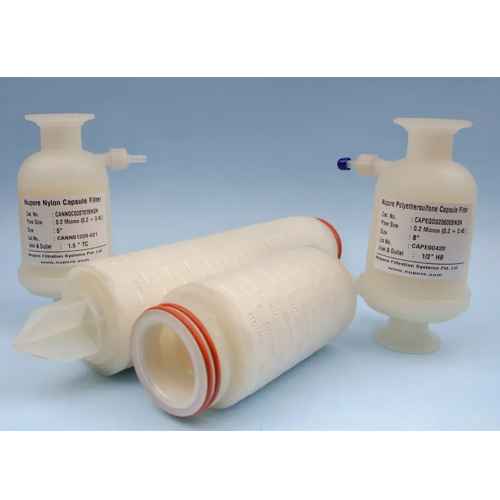
► Sterifunnel
► E-funnel
► Laboratory chemicals
► Pharma excipients
► Certified Reference Materials
► Chromatography consumables
► Glassware & Plasticware
► Liquid handling instruments
► Tabletop laboratory instruments
This makes AAA Enterprises a one-stop solution provider for laboratories.

View Products

View Products
Before placing an order, consider:
► Nature of sample – aqueous or organic?
► Required pore size – 0.22 µm or 0.45 µm?
► Is sterile filtration mandatory?
► Sample volume?
► Protein sensitivity?
► Regulatory compliance requirement?
If uncertain, consulting a technical expert prevents costly mistakes.
► Possible cause – Poor filtration
► Solution – Use high-quality 0.45 µm Nylon or PTFE filter
► Possible cause – High protein binding membrane
► Solution – Switch to PVDF
► Possible cause – Small diameter filter
► Solution – Upgrade to 25 mm or 33 mm
► 0.45 µm Nylon or PTFE is most commonly used.
► Yes, but it requires pre-wetting.
► No, they are strictly single-use devices.
► Low-quality filters may release extractables that interfere with results.
► Yes, bulk and institutional pricing is available.
Syringe filters are not just disposable plastic accessories — they are the first line of defense for your analytical instruments.
Using the right membrane:
► Protects expensive columns
► Improves reproducibility
► Reduces maintenance cost
► Ensures regulatory compliance
► Maintains result accuracy
For laboratories in Delhi and across India looking for genuine syringe filters with technical support and competitive deals, AAA Enterprises in Mayur Vihar provides reliable, high-quality filtration solutions backed by expertise.





Copyright © 2026 AAA Enterprises All Rights Reserved.